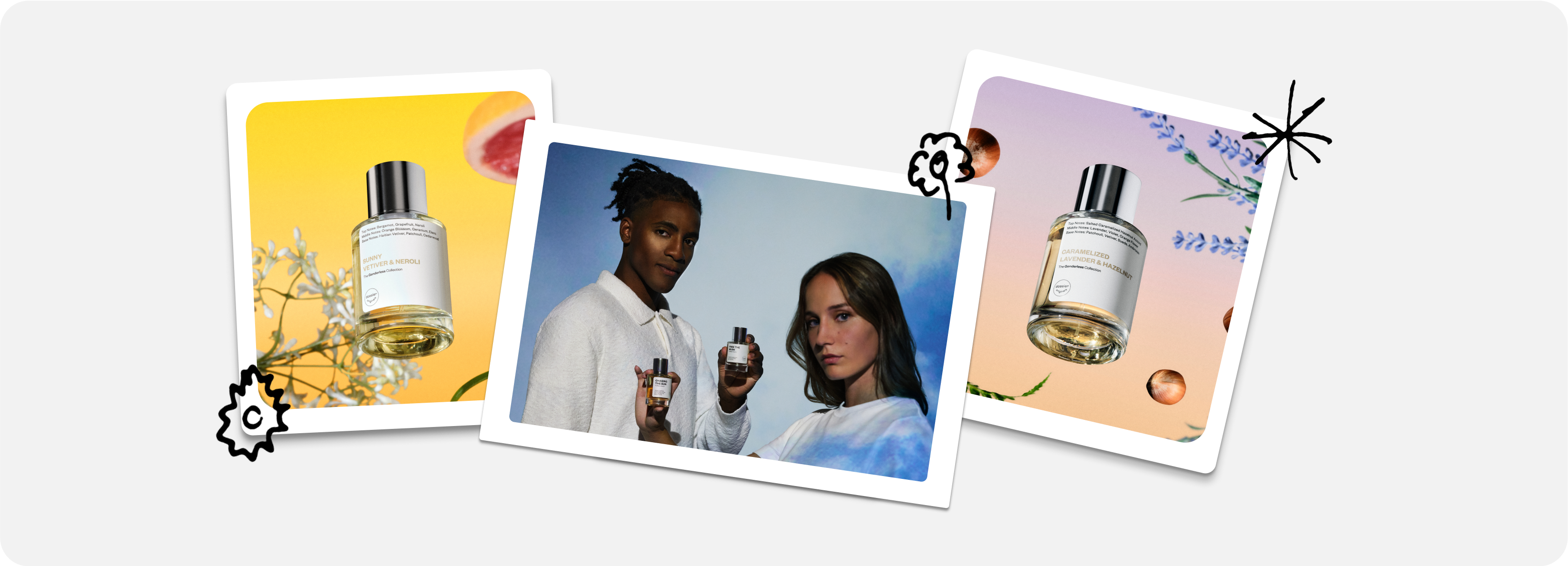
And how Dossier is crafting a genderless future of fragrance.
To understand the gendering of fragrance, we have to take it back—way, way back—to the Middle Ages. It’s around this time that perfumes started being used for personal hygiene. Minimal bathing led to the need to cover up odor with perfume, which was a symbol of health and prosperity. During this time, fragrances were completely unisex, appreciated purely for their aromatic qualities. Think: Rose, herbs, anything to cover up the scent of an unwashed body. (Sorry, we’re just the messenger.)
So how did the divide between gendered perfumes come to be?
The Power of Marketing and Scent Perception
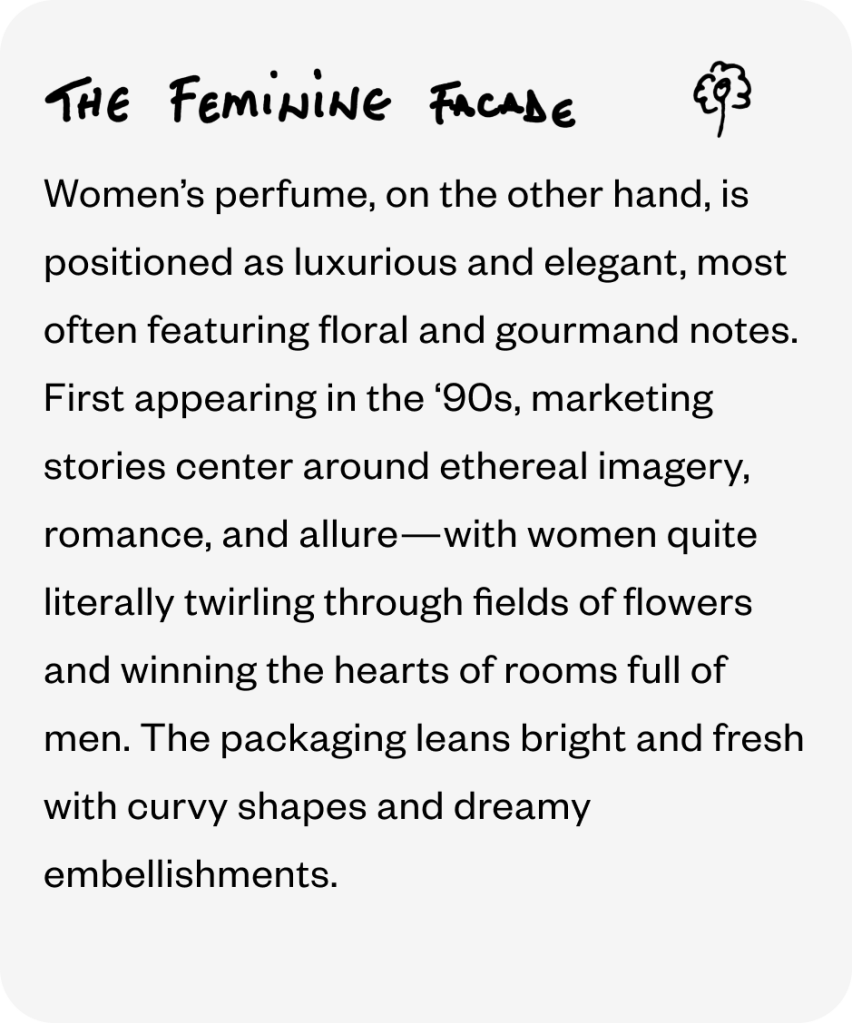
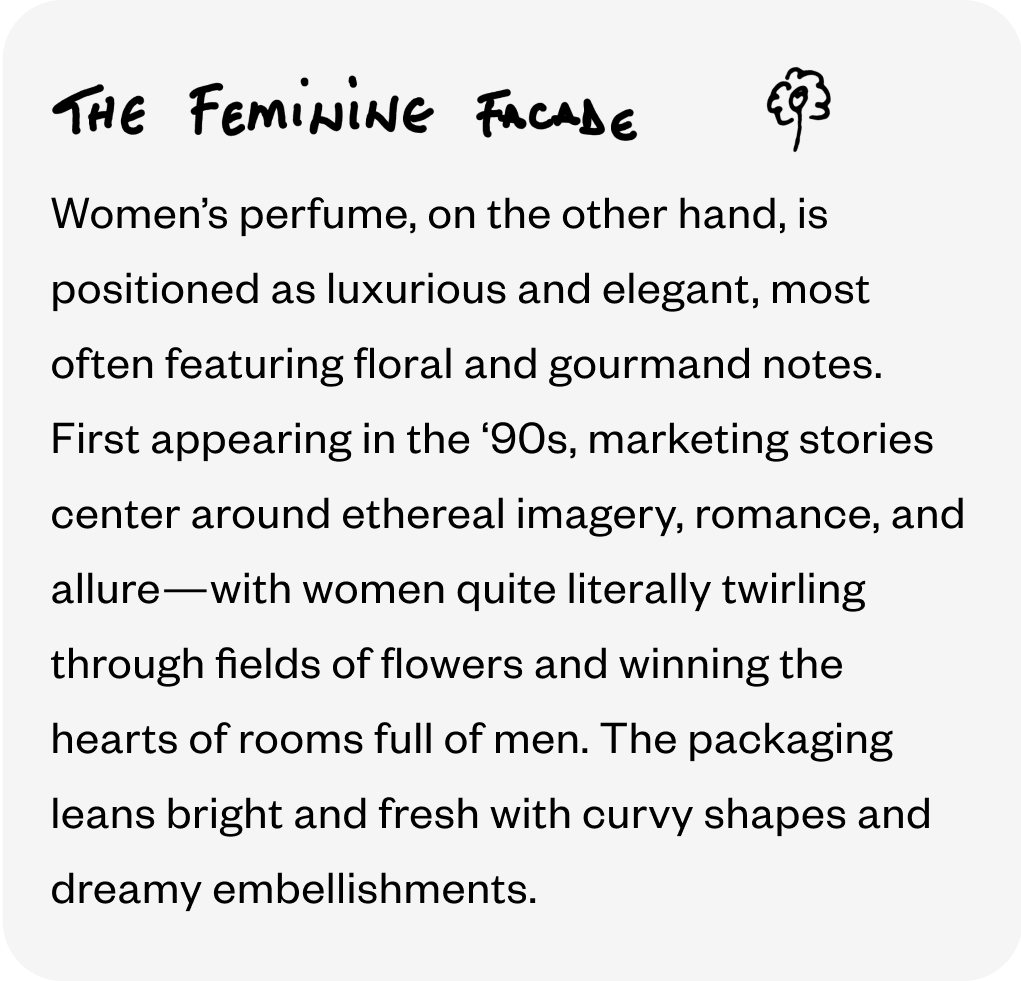
During the 20th century, the rise of the middle class led to an increased demand for luxury goods. As the market for perfume expanded, haute couture and fashion brands entered the fragrance market and began categorizing perfumes by gender. Narrowed target audiences allowed marketers to appeal to masculine and feminine ideals, ultimately selling a feeling—and more perfume.
Although most perfumes and colognes have been highly gendered throughout the last century, there were a few products that escaped the delineation—most notably clean-scented soaps, hair care, and lotions. But the majority of personal scents leveraged gender stereotypes to sell.
Luckily, as culture has evolved, so have consumers—and today’s shoppers are seeing the strategy for what it always was: A sales pitch. As gender norms continue to diffuse and inclusivity takes center stage, we’re being brought back to a time when scents were appreciated for their notes and composition, rather than a marketing-invented idea.
The Movement Back to Unisex Fragrance
Take Le Labo’s most popular fragrance, Santal 33. This cult-classic, genderless scent took the fragrance world by storm in 2011 and still holds its own today. An addictive blend of smokey, woody, and floral, it transcended gender norms with surprising ease and quickly secured a spot as the “it” scent of the 2010s.
So, while the scent is still hot, the $235+ per bottle price tag is not. That’s why we created Woody Sandalwood, a $49 scent inspired by Le Labo’s Santal 33. It’s a luxe blend of mysore sandalwood, orris, violet leaves, and musk for that same versatile, irresistible quality.
Smells Like the Freedom To Be You
Crafting non-gendered fragrances is not only inclusive, but liberating. It allows individuals to express themselves authentically without feeling constrained by stereotypes. By bypassing traditional gender labels, we hope to empower our customers to choose scents based purely on personal taste and style.
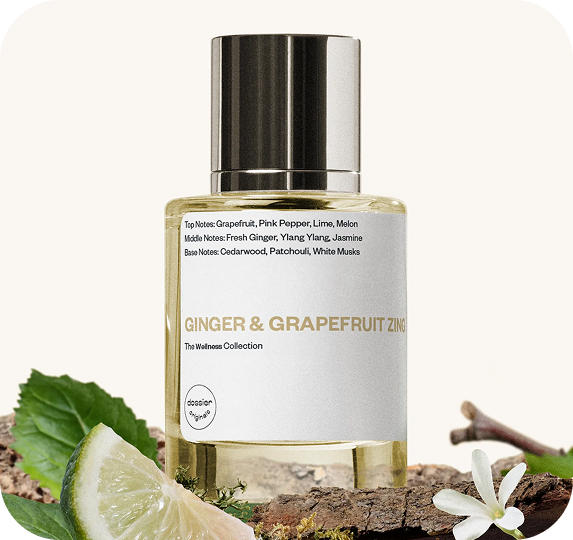
Looking to explore the world of genderless fragrance, but not sure where to begin? Try starting with some universally unisex notes, like fresh citrus, warm woods, or amber.
If you like fresh fragrances, try:
CITRUS NEROLI
Inspired by Tom Ford's
Neroli Portofino
Smells like the Italian Riviera with sparkling freshness and soft warmth.
Top: Neroli | Middle: Orange Blossom
| Base: Musks
If you like warmer scents, try:
WOODY SANDALWOOD
Inspired by Le Labo's
Santal 33
Inner sensuality meets warm comfort with a blend of creamy facets and woods.
Top: Violet Leaves | Middle: Orris
| Base: Musk
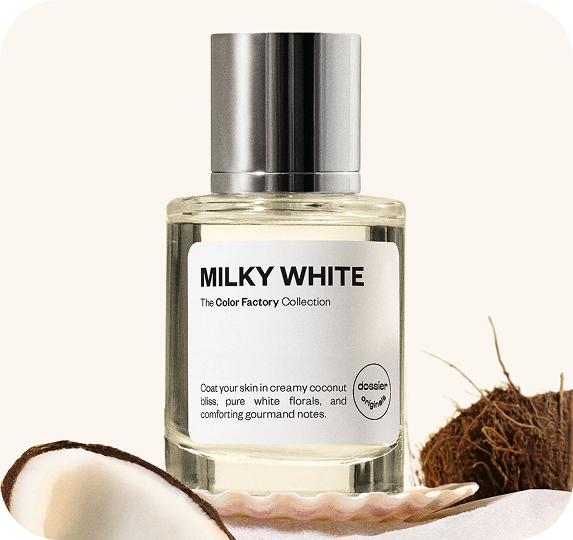
MILKY WHITE
Dossier Originals:
The Color Factory Collection
Cozy, creamy, coconut bliss with a subtly warm, comforting quality.
Top: Coconut | Middle: Fresh Hazelnut
| Base: Vanilla